
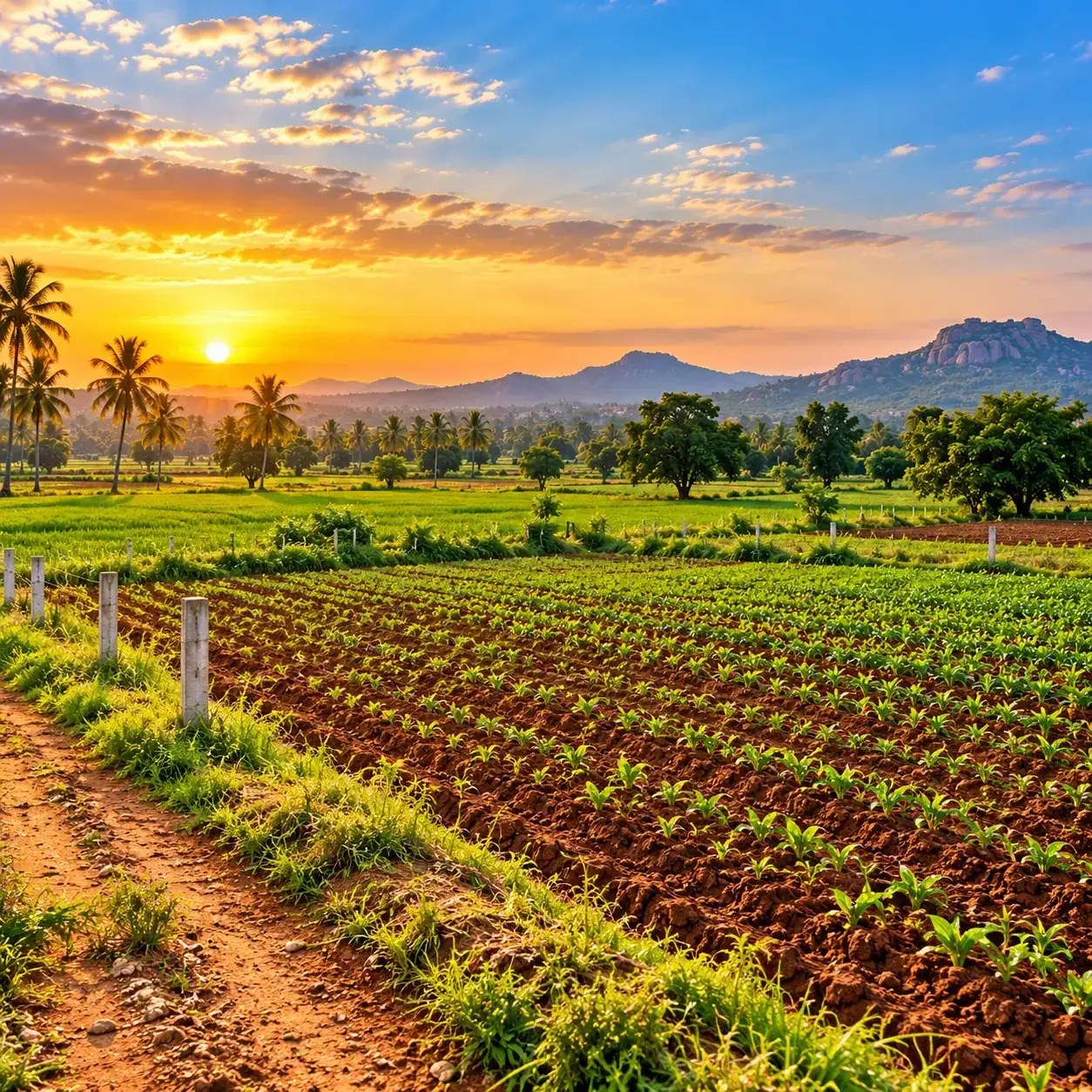
A weekend farm, a coconut grove or simply land on the city's growth path: interest in farmland around Bengaluru has grown steadily since Karnataka eased its purchase rules in 2020. The opportunity is real. So is the risk. Agricultural land rarely comes with the paper trail of an apartment, and a single missing record can tie up your money for years.
1. Who can buy agricultural land in Karnataka
Until 2020, Sections 79A and 79B of the Karnataka Land Reforms Act largely kept non-farmers out. The Karnataka Land Reforms (Second Amendment) Act, 2020 removed those sections. Today:
- Indian citizens can buy agricultural land whether or not they are farmers, and without the old income limit.
- NRIs, OCI cardholders and foreign nationals cannot buy agricultural land, farmhouses or plantations in India. They can only inherit it.
- Companies, trusts and societies still face restrictions and usually need government permission.
- Land ceiling limits on how much a family can hold still apply.
The state government has discussed bringing back some restrictions. Confirm the position at the time of purchase with your lawyer.
2. The documents to check
Land records in Karnataka are digitised on the state's Bhoomi system, and Encumbrance Certificates are available online through Kaveri. Pull them yourself rather than relying on copies handed over by the seller.
| Document | What it tells you |
|---|---|
| RTC (Pahani) | Record of Rights, Tenancy and Crops: the current owner, extent, type of land and any liabilities. Check current and past years. |
| Mutation register (MR) | How ownership passed from one person to the next. Every change should have a matching mutation entry. |
| Title deeds | The chain of sale deeds, partition deeds, gift deeds or wills, ideally going back 30 to 40 years. |
| Encumbrance Certificate (EC) | Registered transactions on the land, such as sales and mortgages, for at least 30 years. |
| Survey sketch and Atlas | The boundaries and extent of the survey number, and where your portion sits within it. |
| Podi or hissa records | Whether the survey number has been formally sub-divided, so that your portion has its own number. |
| Family tree (vamshavruksha) | Every legal heir with a claim. All of them should sign or have formally given up their share. |
The extent shown on the RTC, the survey sketch and the sale deed should all match. Mismatches are common and should be fixed before registration, not after.
3. Red flags that should stop a deal
- Granted land. Land granted by the government to SC/ST families is protected under the PTCL Act. Selling it without government permission can make the sale void, even many years later.
- Government or common land. Gomala (grazing land), kharab land or forest land in the same survey number.
- Acquisition notices. Land marked for a highway, ring road, KIADB industrial area, BDA or BMRDA scheme.
- Tenancy claims. Pending tenancy applications from the land reforms era.
- Missing heirs. A sibling or heir who has not signed.
- Court cases. Pending suits over title or partition.
- Undivided shares. You receive "a portion" of a survey number without its own sub-division and access.
4. Building on farmland: conversion
Buying agricultural land and using it for something other than farming are separate questions. To build a home, layout or resort, the land generally needs conversion to non-agricultural use, approved under the Karnataka Land Revenue Act. That approval depends on the zoning in the local master plan. Karnataka law does allow a farmhouse that is attached to working agricultural land, but the rules are narrow, so check before you plan a weekend home.
If you are told land is "converted", ask for the conversion order and check that it matches the survey number and extent.
5. "Managed farmland" projects
Many developers now sell small farm plots with fencing, plantation and caretaking included. They can work well, but check:
- whether your plot is registered in your name with its own sub-division, or as an undivided share
- who owns the internal roads and common areas
- whether the project promises villas or farmhouses the land is not approved for
- what the maintenance agreement costs, and what happens if you leave it
6. Checks on the ground
- Access. A legal road access, not a path across someone else's field.
- Water. Borewell yield, groundwater levels in the area, and any canal or tank access.
- Power. Whether there is an existing BESCOM connection, or how far the nearest line is.
- Boundaries. Get the land surveyed and the stones fixed before registration.
- Neighbours. Talk to them. They usually know about disputes before any record does.
7. Registration costs
Farmland purchases attract the same stamp duty slabs as other property, up to 5% above ₹45 lakh, plus cess and surcharge, which vary by area. On top of that is the 2% registration fee that applies from 31 August 2025. As with homes, duty is charged on the higher of the agreed price and the guidance value. For the full breakdown, read the true cost of buying a home in Bengaluru.
Your checklist
- Confirm you are eligible to buy: an Indian citizen, within ceiling limits.
- Download the RTC, mutation records and EC yourself from Bhoomi and Kaveri.
- Trace the title chain back 30 to 40 years.
- Check the survey sketch, extent and sub-division against the deed.
- Rule out granted, government, acquisition and tenancy issues.
- Get every legal heir on the sale deed.
- Check zoning and conversion if you plan to build.
- Visit for access, water, power and boundaries.
- Have a property lawyer give a written title opinion before you pay an advance.
Common questions
Can a non-farmer buy agricultural land in Karnataka?
Yes. Since the 2020 amendment to the Karnataka Land Reforms Act, Indian citizens can buy agricultural land whether or not they are farmers, subject to ceiling limits. NRIs and OCI cardholders cannot.
What is an RTC or Pahani?
The Record of Rights, Tenancy and Crops. It shows who owns and cultivates a piece of agricultural land, its extent and type, and any liabilities. You can view it on the Bhoomi land records portal.
Can I build a house on agricultural land near Bengaluru?
Generally only after the land is converted to non-agricultural use, which depends on zoning in the local master plan. A farmhouse linked to a working farm is allowed in limited cases.
This guide is general information, correct as we understand it on 30 October 2026. Rates and rules change. Confirm current charges on the Kaveri portal or with your sub-registrar, and get a property lawyer's opinion before you buy.